

Longjing, or Dragon Well, is one of China’s most celebrated green teas. If you are trying Chinese loose leaf green tea for the first time, it is where we would suggest starting.

But buying it can be confusing. Prices vary enormously. Labels mention West Lake(西湖), Mingqian(明前), handmade and organic.
In this guide, we explain what is worth paying for—from West Lake origins and Mingqian harvests to hand-fired craftsmanship and organic options. We also cover brewing, benefits and storage, helping you find a Longjing you will enjoy at a price that makes sense.
Which differences are worth paying for?
At Valley Green Tea, we have been sourcing Chinese tea for Australian customers since 2008. We believe you deserve a clear explanation of what you are buying—and what makes one bag cost more than another.
1. What Makes a Top-Tier Longjing?
At the premium end of the market, three things attract particular attention:
origin, harvest timing and craftsmanship.
Origin: West Lake’s Famous Growing Areas
West Lake, or Xihu, is Longjing’s most celebrated origin. Five traditional names are especially well known:
- Shi — Shifeng(狮峰): Lion Peak.
- Long — Longjing(龙井): Longjing Village.
- Yun — Yunqi(云栖): the Yunqi area.
- Hu — Hupao(虎跑): the Tiger Spring area.
- Mei — Meijiawu(梅家坞): Meijiawu Village.
One common misunderstanding: Longjing grown outside West Lake is not automatically fake.
West Lake’s growing area is limited. Tea from its most famous core origins is scarcer still. That scarcity, together with its reputation, helps explain the price.
Harvest: The Appeal of Mingqian
Mingqian(明前)— before Qingming, around 4–5 April
This early spring harvest is especially sought after.
- Young shoots are tender.
- The early picking window is short.
- Limited supply meets strong demand.
The exact picking dates vary with the weather and tea plants.
Craftsmanship: Hand-Fired by an Experienced Tea Master

Traditional Longjing is worked by hand in a heated pan. The maker controls the heat, movement and pressure as the leaves take shape.
Some premium producers still preserve this skilled handwork. Others use machinery, or combine machine processing with hand finishing.
For buyers seeking a prestigious Longjing, a documented West Lake origin, a pre-Qingming harvest and skilled hand processing are a sought-after combination.
2. How Much Does Top-Tier Longjing Cost?
Now comes the big question: price.
For that combination of origin, early harvest and handwork, we would suggest budgeting around A$100 per 100g or more. Treat this as a starting budget, not a fixed market price.
The particular garden, maker, harvest and quantity all matter.
How High Can Prices Go?
In 2005, a special 100g lot of Longjing sold for RMB145,600 (around A$30,000) at auction in Hangzhou.
You do not need to pay a collector’s price to enjoy a good cup of Longjing.
3. What Does Good-Value Longjing Look Like?
Do you need to buy from the very top of the market?
No.
After 20 years of drinking tea and serving tea lovers,
our view is simple: find a tea you enjoy drinking.
A high price does not guarantee that it will be your favourite. But an cheap tag normally means question mark.
Finding the sweet spot between price and quality is what we work hard on at Vally Green Tea.
If You Want a Premium Core-Region West Lake Longjing
We have very good sourcing in origins such as Shifeng and Meijiawu.
Contact us with the origin you want to explore and your budget. We can discuss available options and explain what you would be paying for.
If You Want Longjing for Everyday Enjoyment
Try our Longjing tea. Years of tasting and selecting tea have shaped our choice: a Longjing that balances flavour with everyday value.
We source from the Hangzhou area of Zhejiang, beyond the most expensive West Lake core origins. Our focus is on finding enjoyable tea at a price that makes sense for regular drinking.
Sometimes the right tea is simply the one you look forward to brewing each day.
4. Organic Longjing Tea: Organic Dragon Well in Australia
We know many Australians love organic—and tea is no exception.
If you prefer organic, meet our Organic Dragon Well.
It from a Chinese tea estate with EU and USDA Organic certifications.
Here, weeds are removed by hand rather than sprayed with chemical herbicides.It takes patience and plenty of hands-on work.
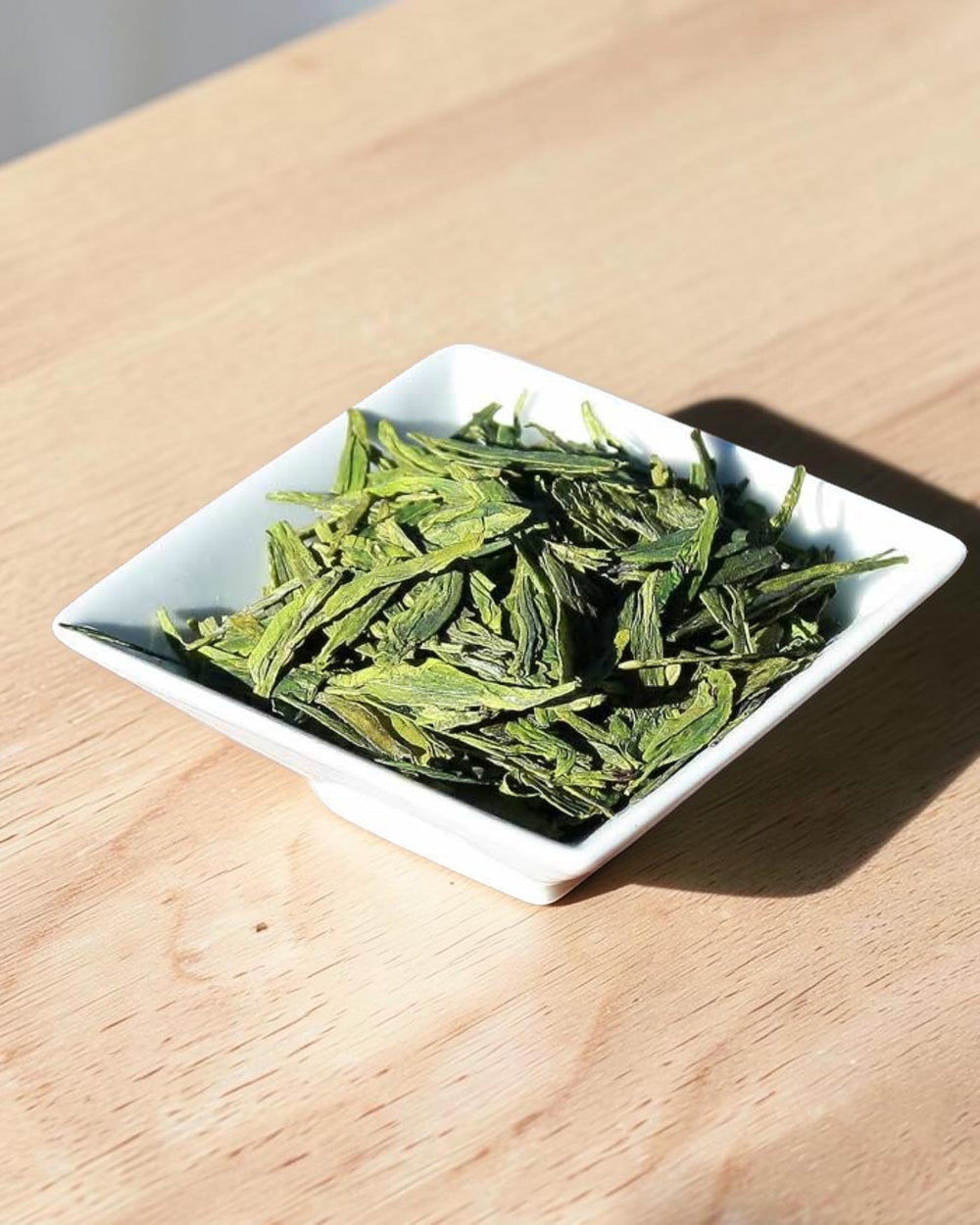
Does Organic Longjing Taste Different?
Our organic selection has its own character. Expect the familiar toasted-bean aroma of Longjing, with gentle sweetness and a smooth, lingering finish.
- Aroma: toasted, nutty and inviting.
- Taste: fresh, sweet and mellow.
- Finish: clean, with sweetness that stays after the sip.
For us, organic credentials are only part of the choice. The tea has to taste good, too.
Try it alongside our regular Longjing and discover which one you look forward to brewing again.
Explore our Organic Dragon Well →
5. How to Brew Dragon Well Tea
A good Longjing deserves a little attention.
 Choosing Your Teaware: Longjing Loves Glass
Watching Longjing leaves rise, fall and slowly unfold is part of the pleasure. A clear glass gives you a front-row seat.
But in an ordinary glass, the leaves stay in the water as you drink. Leave them too long, and the tea can turn bitter.
A glass infuser gives you the view and control over the brewing time. Separate the leaves from the water when your tea is ready.
Explore our Tea Infuser Collection for an easy way to enjoy gongfu-style brewing in glass.
Prefer a traditional approach?
Choose a gaiwan. This classic lidded bowl lets you control each infusion and pour out the tea when it tastes right.
Find yours in our Gaiwan Collection.
How to Brew Longjing in a Gaiwan
Start with:
- Vessel: a 120 mL gaiwan.
- Tea: 3–4 g.
- Water temperature: 80–85°C.
Adjust the leaf amount proportionally for a larger or smaller vessel. Fill below the rim so you can pour comfortably.
1. Warm the gaiwan
Rinse with hot water, then empty it.
2. Add the leaves
Gently move the dry leaves around the warm bowl. Take a moment to enjoy their toasted aroma.
3. Wet the leaves
Add a little water and swirl gently for about five seconds.
4. Fill the gaiwan
Pour gently along the inside wall. Watch the flat leaves begin to open.
5. Brew, pour and taste
After filling, use these times as your starting point:
- First infusion: 5 seconds.
- Second infusion: 10–15 seconds.
- Third infusion: 20–30 seconds.
- Later infusions: gradually increase the time as the flavour becomes lighter.
Pour out the tea fully after each infusion.
Too strong? Shorten the next steep.
Too light? Give it a little longer.
Leave the lid off between infusions so heat can escape. Keep brewing for as long as you enjoy the flavour.
6. How to Store Longjing Tea
Fresh Longjing has an aroma worth protecting.
Keep it away from heat, light, moisture and strong smells.
Keep a Small Amount Ready to Brew
For your everyday tea:
- Use a tightly sealed, light-blocking container.
- Store in a cool cupboard, away from the stove.
- Keep it separate from coffee and spices.
- Always use a dry spoon.
Keep Reserve Tea in the Fridge
Refrigeration can help preserve freshness. Keep the packet tightly sealed inside an airtight container to keep out moisture and fridge odours.
Let the sealed packet reach room temperature before opening.
This helps prevent condensation from forming on the leaves.
7. Longjing Tea Benefits
Longjing brings flavour, naturally occurring tea compounds and a welcome pause to your day. Here are eight common topics behind its healthy reputation.
- Energy and focus — Longjing contains caffeine and L-theanine. Enjoy a cup when you want a refreshing break and a little lift.
- Heart health — Green tea drinking has been associated with heart health in some population studies. Its catechins are among the compounds researchers are exploring.
- Metabolism — Catechins and caffeine have been studied for modest effects on energy use and body weight. Unsweetened Longjing also makes an easy alternative to sugary drinks.
- Immune research — Green tea catechins and theanine have been investigated for their role in immune defence, including trials using concentrated preparations.
- Vitamin C — Tea leaves can contain vitamin C, but processing, storage and brewing affect how much reaches your cup. Longjing’s main appeal is its fresh flavour, rather than its vitamin content.
- Gut health — Small human studies have explored how green tea affects gut bacteria. For everyday enjoyment, its light, savoury flavour also makes it a pleasant drink after a meal.
- Oral health — Researchers have also examined green tea’s effects on bacteria in the mouth. Its clean finish makes it a refreshing choice between meals.
- Less sugar in your day — Brewed without sweeteners, Longjing has no added sugar. Swapping a sweet drink for a cup is a straightforward way to reduce your sugar intake.
Final Thoughts on Longjing Tea
You can spend hours comparing origins, harvest dates and prices.
At some point, the best next step is to brew a cup.
New to Longjing? Our everyday selection is where we suggest starting.
Already drink it? Try ours alongside your usual tea. Use the same water, leaf amount and brewing time. Let your taste decide.
Try VGT Dragon Well Longjing →
There is more to discover, too. Explore our Chinese Green Tea Collection for other styles we have selected with flavour and value in mind.

